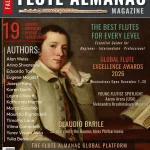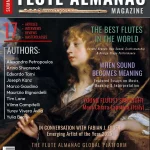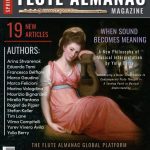
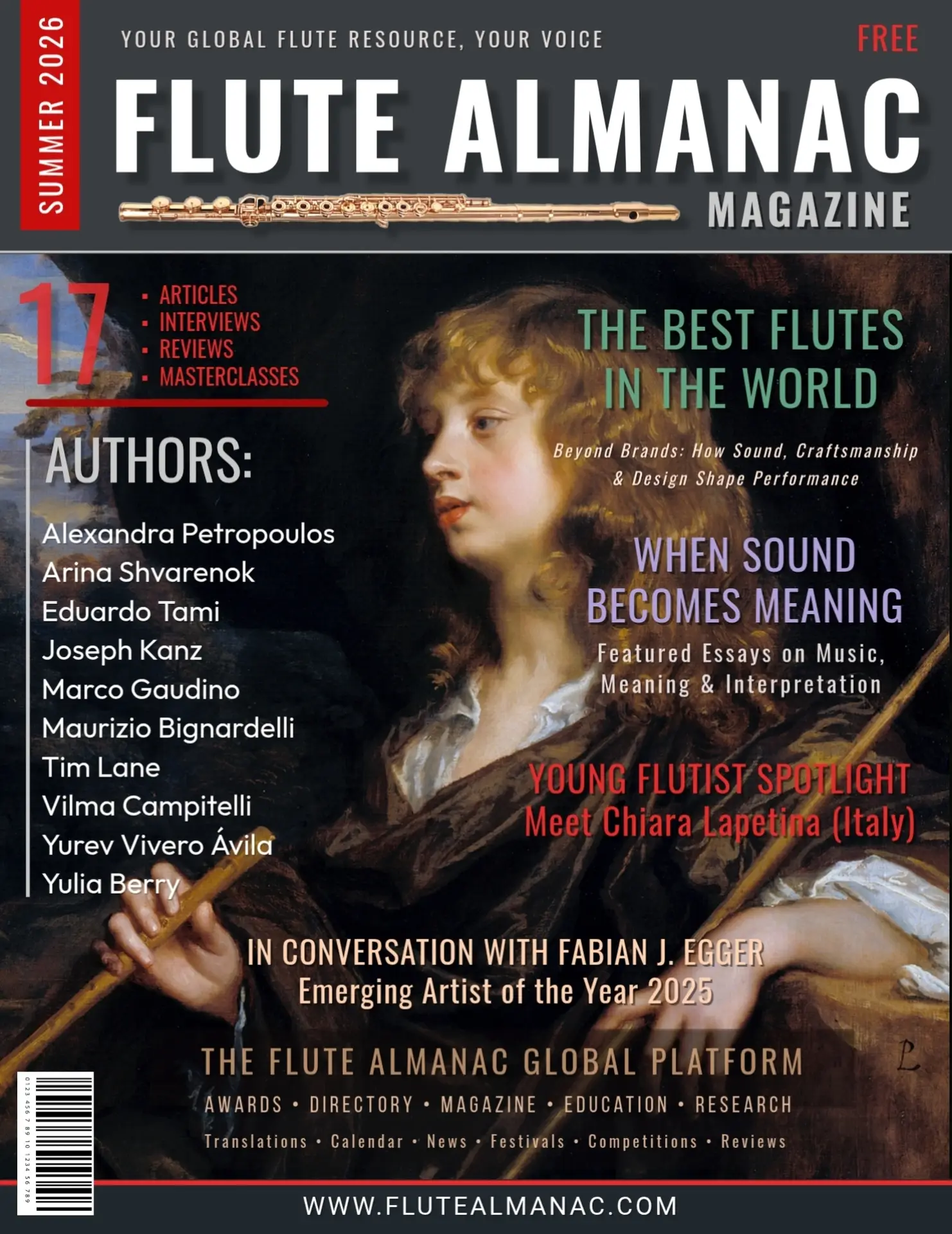
Flute Magazine Summer 2026
The Summer 2026 edition of Flute Almanac continues the magazine’s mission of bringing together diverse voices, perspectives, and areas of expertise from across the international flute community. This issue presents contributions from performers, educators, researchers, historians, composers, and flute makers representing multiple countries and traditions, reflecting the remarkable breadth and vitality of flute culture today.
This edition also arrived during a period of unprecedented growth for Flute Almanac. In April 2026, the platform surpassed 1.18 million requests in a single day, establishing a new milestone in its development and demonstrating the expanding global reach of flute-focused educational and cultural content.
The publication also became a regular presence in Google Discover, introducing articles, research, educational resources, and news to hundreds of thousands of readers worldwide.
For a publication devoted entirely to the flute, its history, repertoire, performers, makers, and ideas, these developments represent something far more significant than website statistics. They reflect the extraordinary scale, diversity, and curiosity of the international flute community and the continuing demand for thoughtful, well-documented musical knowledge.
With instant translations and readers spanning more than 250 countries and territories, Flute Almanac continues to grow as a truly global meeting place for flutists.
Another significant development since the Spring edition was the successful launch of Young Flutist Spotlight, a new international initiative dedicated to recognizing talented pre-college flutists and the teachers who guide their artistic growth. The first featured students began forming what will become a growing international archive of emerging artists, celebrating dedication, potential, and musical development while strengthening connections across generations of flutists worldwide.
The Summer edition presents a wide range of topics spanning performance, pedagogy, history, instrument making, contemporary music, philosophy, and artistic development.
Readers will encounter explorations of breathing physiology, embouchure mechanics, musical memory, historical flute systems, contemporary repertoire, and the evolving relationship between music, technology, and human experience. The issue also features interviews, reviews, educational masterclasses, research projects, and reflections on the artistic, intellectual, and human dimensions of music-making.
Together, these contributions illustrate a flute community that is simultaneously rooted in tradition, engaged with scholarship, open to innovation, and deeply committed to artistic excellence.
As Flute Almanac continues to expand its international reach and develop new initiatives, this edition reaffirms the magazine’s commitment to connecting flutists across borders while celebrating both the heritage and the future of the instrument.
Young Flutist Spotlight – May 2026: Meet Chiara Lapetina
In the inaugural feature of the Flute Almanac Young Flutist Spotlight, we travel to southern Italy to meet fourteen-year-old flutist Chiara Lapetina. A dedicated young musician from the town of Tramutola, Chiara has already begun building an impressive foundation through her studies, performances, and passion for music. Readers discover her musical journey, aspirations, and the role the flute plays in her life, while also celebrating the guidance of her teacher, Alessandra de Nicolo. Created as a non-competitive international initiative, the Young Flutist Spotlight highlights promising pre-college flutists from around the world and recognizes the teachers, families, and communities that help nurture the next generation of artists.
Fabian Johannes Egger: Beyond the Instrument
In this reflective interview, eighteen-year-old German flutist, composer, and Global Flute Excellence Awards Emerging Artist of the Year Fabian Johannes Egger speaks about identity, creativity, success, and artistic growth beyond external achievements. Already recognized through major international prizes and performances across Europe and Asia, Egger reveals a thoughtful and deeply curious artistic personality. His answers move beyond career milestones to explore sound, doubt, ambition, responsibility, and the search for a personal voice. The result is an intimate portrait of a young musician at the beginning of a remarkable career, determined not only to succeed, but to continue questioning, evolving, and protecting the human depth behind the instrument.
Morphilude Review: A Journey Through Stéphane de Gérando’s Labyrinth of Time
More than a recording, Morphilude is an invitation into a vast artistic universe. This review explores Stéphane de Gérando’s ambitious work for flutes, real-time electronics, and fixed sounds, performed by contemporary flute specialist Matteo Cesari. Part of the composer’s long-running multidisciplinary project Labyrinth of Time, the work blends acoustic and electronic worlds, memory and transformation, structure and improvisation. The review examines its innovative use of the flute family, extended techniques, and interactive technologies, while also considering the larger artistic vision that connects music, research, visual art, and digital creation. At its center remains the expressive power of the human performer, guiding listeners through a constantly evolving landscape of sound, imagination, and discovery.
Imposter Syndrome and Digital Perfectionism
In the second installment of The Musician’s Mind in the Digital Age, Arina Shvarenok examines two interconnected psychological challenges that have become increasingly common among modern musicians: imposter syndrome and digital perfectionism. As social media, online performance culture, and constant digital exposure reshape professional expectations, musicians often find themselves caught between relentless comparison and the pursuit of unattainable perfection. Drawing on psychological research and the realities of contemporary musical life, Shvarenok explores how these phenomena affect confidence, creativity, performance, and artistic growth, while offering a thoughtful perspective on the hidden emotional costs of making music in an always-connected world.
Finding Your Tribe
What keeps adult musicians engaged long after lessons, method books, and practice routines have become familiar? In this thoughtful and deeply human essay, United Kingdom flutist and educator Alexandra Petropoulos explores the importance of community in a musician’s life. Drawing on conversations with members of the Flute Nerd Lab, she examines the loneliness many adult and returning players experience, the search for belonging, and the transformative power of finding others who share the same passion. More than an article about online communities, this is a reflection on identity, encouragement, friendship, and the simple but profound need to be seen and understood. For many musicians, finding the right community may be just as important as finding the right teacher.
Tango Phrasing and Extended Techniques – Part I
In this fascinating exploration of tango performance practice, Argentine flutist, composer, and arranger Eduardo Tami examines one of the genre’s most distinctive elements: phrasing. Drawing on decades of experience as a performer and specialist in Argentine popular music, he explains how rhythmic flexibility, melodic shaping, articulation, and timing contribute to an authentic tango interpretation. Through practical examples and stylistic insights, readers discover how performers transform written notes into expressive musical storytelling. This first installment lays the foundation for understanding the unique language of tango and prepares the way for a deeper exploration of extended techniques and advanced expressive devices in Part II.
My Encounters with Reform and English Hybrid Flutes – Part I: The Reform Flute
Drawing on decades of personal experience with historical instruments, German musician Joseph Kanz begins a fascinating five-part exploration of alternative flute systems that once challenged the dominance of Theobald Böhm’s design. In this first installment, he examines the Reform Flute, an instrument developed in Germany as an alternative to the Boehm system and widely used well into the twentieth century. Combining historical research, technical observations, and firsthand playing experience, Kanz discusses the instrument’s origins, fingering system, ergonomics, tonal characteristics, and role in orchestral performance. The article offers valuable insight into a chapter of flute history that is often overlooked, revealing how different instrument designs shaped both performance practice and the repertoire written for them.
Physiological Breathing
In the second part of his series on physiological breathing, Italian flutist and researcher Marco Gaudino continues his detailed exploration of breath, airflow, and sound production in flute playing. Focusing on the relationship between respiratory mechanics, air compression, the throat, the lips, and control of the outgoing air stream, the article examines both ineffective and effective breathing patterns for flutists. Gaudino contrasts clavicular breathing with costo-abdominal breathing, explaining how each affects tone, air management, articulation, vibrato, and technical control. Combining scientific observation with practical flute pedagogy, this installment invites readers to approach breathing not only as a physical necessity, but as a central element of thoughtful and informed flute technique.
Solo Flute Literature in Nineteenth-Century Italy
Why was solo flute music relatively rare in nineteenth-century Italy, a country that produced some of the era’s greatest flute virtuosos? In this fascinating historical study, Italian flutist and musicologist Maurizio Bignardelli explores the origins, development, and unique character of Italian solo flute repertoire during the nineteenth century. From the vibrant musical culture of Naples to the extraordinary virtuosity of Emanuele Krakamp, the article traces the composers, performers, publishers, and social traditions that shaped this overlooked body of music. Rich in archival research and historical detail, it offers valuable insights into the evolution of flute performance, instrument design, and musical life in Italy during a period dominated by opera and salon culture.
The Rule of Mechanical Separation – Part I: Foundations of Embouchure Independence
In this practical and thought-provoking masterclass, renowned United States pedagogue Tim Lane introduces the Rule of Mechanical Separation, a systematic approach to developing greater independence among the lips, jaw, tongue, and other mechanisms involved in flute playing. Building on his previous work exploring anchor tonguing, Lane presents a series of carefully designed exercises that help flutists recognize and reduce unnecessary muscle groupings, improve embouchure efficiency, and gain greater control over tone production. Drawing on decades of teaching experience, this first installment lays the foundation for a deeper understanding of embouchure mechanics and offers valuable tools for players seeking greater freedom, flexibility, and consistency.
Ester Mägi (1922–2021): The Voice of the Estonian Soul
Widely regarded as the most important female composer in Estonian history, Ester Mägi occupies a unique place in twentieth-century music. In this richly researched feature, Italian flutist and scholar Vilma Campitelli explores Mägi’s remarkable life, artistic philosophy, and enduring legacy, tracing her journey through war, political upheaval, and Estonia’s struggle for cultural identity. The article examines how folk traditions, nature, memory, and national consciousness shaped her distinctive musical language, while also highlighting her contributions to the flute repertoire. Through biographical insights and musical analysis, readers are introduced to a composer whose quiet, deeply personal voice became one of the defining sounds of modern Estonia.
Education and Discovery: Investigating Hotteterre’s Flute Pedagogy
In the second installment of The Road to Hotteterre, Mexican flutist and scholar Yurev Vivero Ávila continues his personal and academic journey into the world of Jacques-Martin Hotteterre and the French Baroque flute tradition. Combining autobiography, historical research, and reflections on performance practice, the article follows the author’s years of professional training, his first experiences in musicology, and the gradual development of a long-term translation project dedicated to Hotteterre’s influential flute treatises. Along the way, readers encounter inspiring teachers, formative artistic experiences, and the challenges of bringing important historical sources to Spanish-speaking musicians. More than a scholarly study, this series offers a unique perspective on how curiosity, research, and artistic passion can evolve into a lifelong pursuit.
Toward Meaning: An Interdisciplinary Journey Through Music, Science, Philosophy, and Human Experience
What gives music meaning? Why can organized sound move us, shape memory, evoke emotion, and communicate experiences that often seem beyond words? In this introduction to the ongoing Toward Meaning essay series, United States flutist, educator, author, and philosopher Yulia Berry explores the central questions that unite music, science, mathematics, psychology, philosophy, history, and human experience. Bringing together ideas developed across dozens of essays, the article traces an interdisciplinary search for meaning through themes of beauty, perception, structure, memory, time, creativity, and consciousness. Rather than offering definitive answers, Toward Meaning invites readers into a continuing conversation about one of humanity’s oldest and most enduring questions: how meaning arises and why it matters.
Why Flutists Forget Music on Stage – and How to Build Reliable Musical Memory
Why do musicians sometimes forget music they know perfectly well in the practice room? In this practical exploration of musical memory, United States flutist, educator, and author Yulia Berry examines the cognitive processes that underlie memorization and performance. Moving beyond the common notion of “muscle memory,” she explains how reliable performance depends on the interaction of aural, visual, analytical, motor, and emotional memory systems. The article offers insights into why memory slips occur under pressure, how performers can strengthen recall through structural understanding and strategic practice, and why deep musical comprehension creates greater security than repetition alone. Drawing on principles of music learning and performance psychology, it provides valuable guidance for students, teachers, and performers seeking greater confidence and consistency on stage.
Jürgen Franz’s Scheherazade Paraphrase for Flute and Piano
Inspired by Nikolai Rimsky-Korsakov’s iconic orchestral masterpiece, Scheherazade Paraphrase by Jürgen Franz brings the magic of One Thousand and One Nights into the world of chamber music. Transforming familiar themes from the beloved symphonic suite into a virtuosic work for flute and piano, Franz creates a fresh and intimate perspective on one of the most colorful scores in the classical repertoire. Combining lyrical storytelling, brilliant technical passages, and expressive dialogue between the two instruments, the work places the flute at the center of Scheherazade’s musical narrative. This feature introduces readers to a compelling new addition to the flute repertoire and includes a performance by the composer alongside pianist Shoko Gamo.
The Best Flutes in the World: Beyond Brands
Every year, countless flutists ask the same question: What is the best flute in the world? While the search often begins with brand names and rankings, the answer is far more complex. This article explores the qualities that truly define exceptional instruments, from craftsmanship and design philosophy to artistic vision and personal compatibility. Moving beyond prestige and reputation, the discussion invites readers to consider a deeper perspective: that the finest flutes are not necessarily the most famous or expensive, but those that inspire great music and help musicians find their own artistic voice.
We express our sincere gratitude to all the contributors who made this edition possible. The generosity of authors who share their knowledge, research, artistic reflections, and experiences continues to shape Flute Almanac as a meaningful platform for the global flute community.
We are equally grateful to readers around the world. Whether they discovered Flute Almanac through a search engine, social media, Google Discover, a recommendation from a colleague, or one of its international initiatives, their curiosity, engagement, and support remain the driving force behind the publication’s continued growth.
The remarkable milestones reached during this period—including more than 1.18 million requests in a single day, the successful launch of Young Flutist Spotlight, and the continued expansion of the magazine’s international readership—reflect not only the growth of Flute Almanac, but also the strength, diversity, and vitality of the worldwide flute community itself.
As the publication celebrates the ideas, research, artistry, and perspectives gathered in the Summer 2026 edition, it also looks ahead. Flutists, educators, scholars, composers, flute makers, researchers, and arts organizations are invited to contribute articles, interviews, reviews, news, and reflections that enrich the ongoing conversation surrounding the flute and its evolving culture.
Together with its contributors and readers, Flute Almanac continues this shared exploration of the flute’s history, artistry, innovation, and future.
Explore the Complete Summer 2026 Edition
Read the full articles, watch performances, explore related features, and discover the complete Summer 2026 edition on Flute Almanac.
Read the Summer 2026 EditionContinue Beyond The Babel Flute Archive
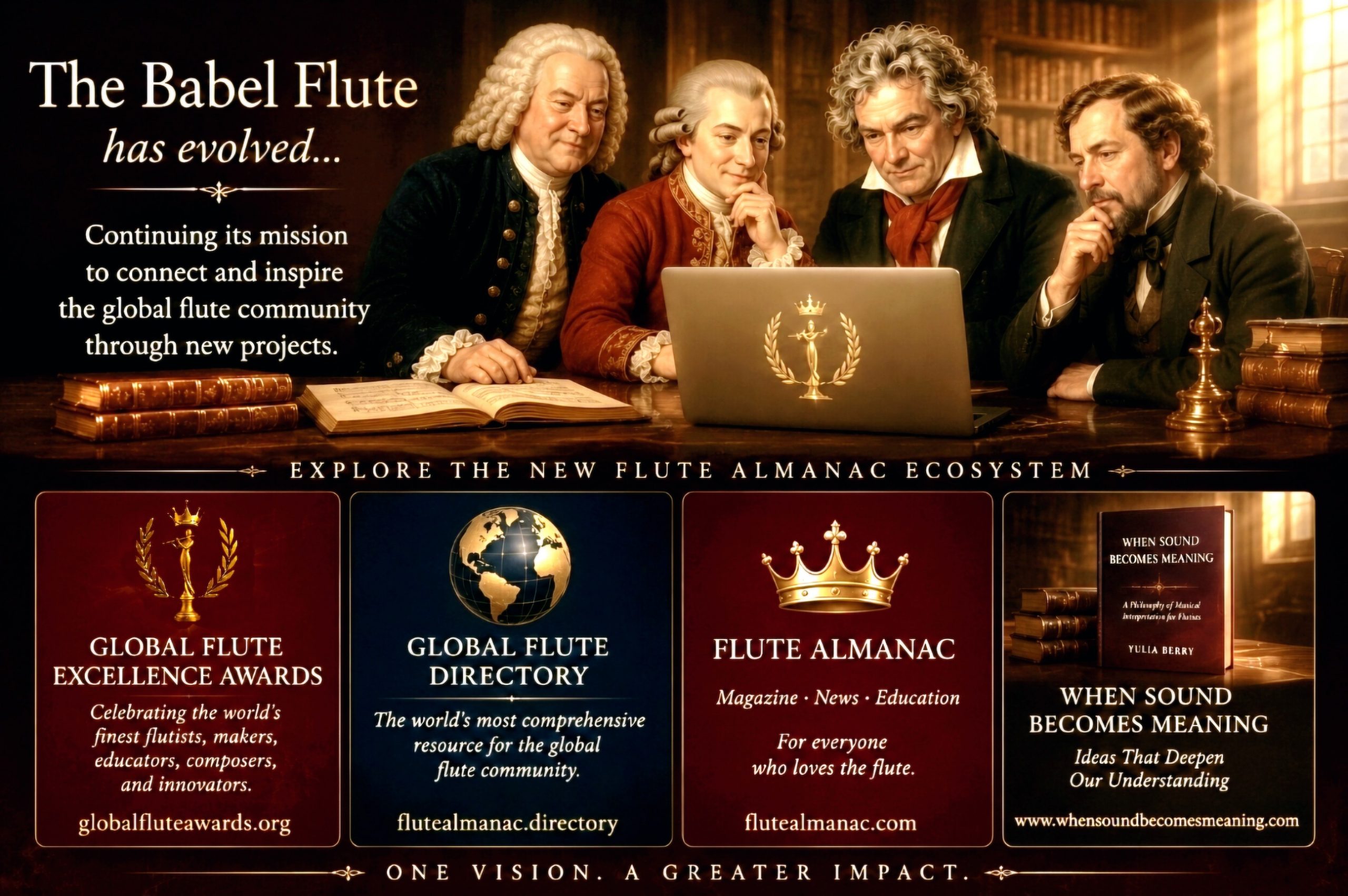
Discover the interconnected projects that continue the legacy of The Babel Flute through international publishing, professional visibility, historical preservation, recognition, and global community.